
production of lightweight aggregate from mining manufacturer Grasping strong production capability, advanced research strength and excellent service, Shanghai production of lightweight aggregate from mining supplier create the value and bring values to all of customers.
 WhatsApp)
Corpus ID: 53685491. Production of Lightweight Aggregates from Coal Gasification Fly Ash and Slag @inproceedings{Aineto2005ProductionOL, title={Production of Lightweight Aggregates from Coal .
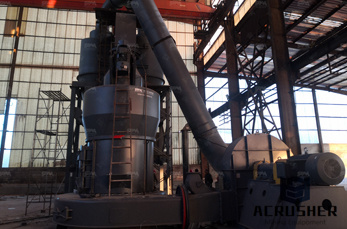
Aggregates are important because of the qualities they possess such as strength, shape, size, texture, bulk, abrasion ability or resistance, medicinal, etc. For more than 50 years, General Kinematics has provided innovative vibratory equipment that is essential in the mining and aggregate manufacturing process. A World of Minerals
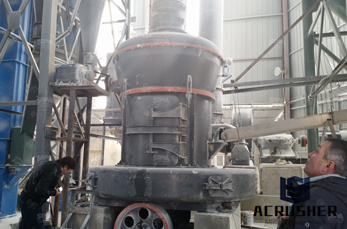
Most lightweight aggregates are made from materials such as clay, shale, or slate. Additionally, blast furnace slag, natural pumice, vermiculite, and perlite also can be used as substitutes. Mining & Quarrying: The production process begins from mining or quarrying the raw materials.
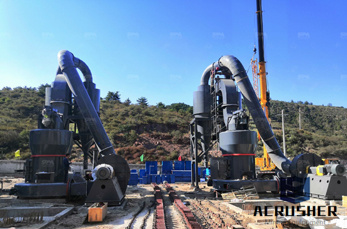
Mining The raw material for Norlite is a thick sequence of shale, approximately 450 million years old, known as the Normanskill Shale. The rock is an exceptionally uniform, dark gray to black, very fine-grained shale with occasional thin, discontinuous beds of mudstone and siltstone.
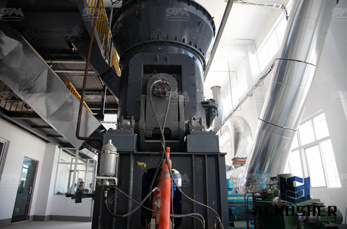
Production of lightweight aggregates distroid concre. Porous aggregate for light-weight concrete. Nov 25, 1974,gate of light-weight concrete at the time of pumping, Nov 27, 1973 Germany,properties are impaired or even destroyed For this reason, the said,The production of porous aggregate from expanded clay or expanded. 32 Laboratory. get price.
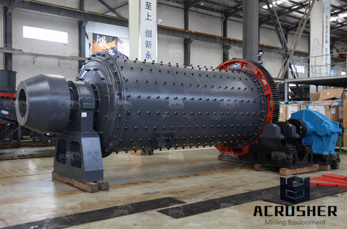
Feb 20, 2018· The use of waste clay generated by major infrastructure development projects to make lightweight aggregate has a positive environmental impact and contributes towards a more circular economy. This paper reviews the manufacturing process used to produce lightweight aggregates from clay and the influence of processing conditions on properties.
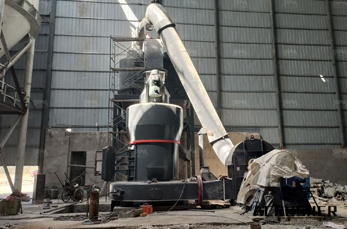
Lightweight aggregate(sometimes is called as low density aggregate) is a generic name of a group of aggregates for structural concrete, mortar, or plaster that weighs ...
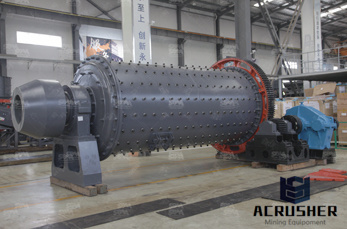
The data suggest that the heavy metals are effectively controlled within the hard outer surface layer formed in the lightweight aggregate production process. It is interesting to consider also a related study by Cheeseman et al. (2003) that examined the effect of a similar sintering process on the leaching behaviour of SSA, though in this case ...
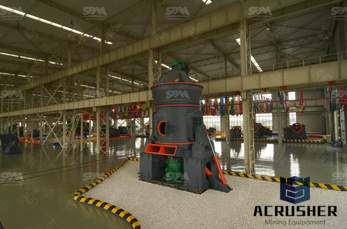
Glass Aggregates are the most versatile construction materials of the 21st century. Sustainable, resilient, and made from recycled glass. Glass Aggregates reduce the urban waste .
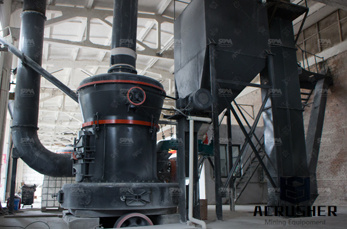
Jun 01, 2009· Sintering.Subsequently, the pellets passed on to zone 2 of the rotary kiln at 1150 °C, 1175 °C, 1200 °C and 1225 °C (T heating) for 10 and 15 min at each temperature, in order to achieve a viscosity state in the mass of the lightweight aggregate that can trap the internally generated gases.. The speed of rotation was fixed at 2.2 rpm. During the burnout and sintering steps, the tilt was ...
The North Carolina Aggregates Association, incorporated in 1964, is a nonprofit trade association of companies engaged in the production and/or sale of crushed stone, sand and gravel in North Carolina. Associate members are suppliers of equipment, products or service to the aggregates .

The production of lightweight aggregate : • Mining or quarrying the raw material. • The material is crushed with cone crushers, jaw crushers, hammer mills, or pug mills and is
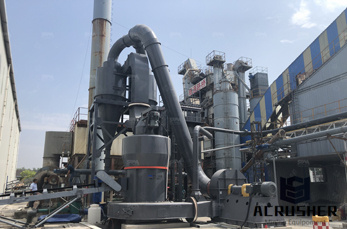
AGGREGATE PRODUCTION This chapter discusses the total process of aggregate production from extraction through processing. Also discussed is the handling, stockpiling, and shipping of the product .
The scientific article "Application of Modified Peat Aggregate for Lightweight Concrete" presents the results of studies of the properties of a new composite material for use in enclosing structures of residential and public buildings. Physical and mechanical characteristics of possible aggregates of local production .
The study was carried out as three stages. At the first stage, 90% of the pumice aggregate and 10% of the sand (Reference sample) were used and lightweight concrete was produced. At the second stage, boron waste at the rate of 1%, 3%, 5%, 7%, and 9% was used for pumice aggregate and the doped lightweight .
Apr 21, 2009· Production of lightweight aggregates from mining residues, heavy metal sludge, and incinerator fly ash. Huang SC, Chang FC, Lo SL, Lee MY, Wang CF, Lin JD. J Hazard Mater, 144(1-2):52-58, 11 Oct 2006 Cited by: 14 articles | PMID: 17118542
Construction aggregate, or simply aggregate, is a broad category of coarse- to medium-grained particulate material used in construction, including sand, gravel, crushed stone, slag, recycled concrete and geosynthetic aggregates.Aggregates are the most mined materials in the world. Aggregates are a component of composite materials such as concrete and asphalt concrete; the aggregate .
Crushed stone, one of the most accessible natural resources, is a major basic raw material used by construction, agriculture, and other industries that utilize complex chemical and metallurgical .
Lightweight Aggregate Production (1995) This 1995 document presents EPA's rationale in withdrawing a specific waste generated in the production of lightweight aggregate from the RCRA Mining Waste Exclusion. Titanium Tetrachloride Production .
Jun 01, 2007· In this study, artificial lightweight aggregate (LWA) manufactured from recycled resources was investigated. Residues from mining, fly ash from an incinerator and heavy metal sludge from an electronic waste water plant were mixed into raw aggregate pellets and fed into a tunnel kiln to be sintered and finally cooled rapidly.
production of lightweight aggregates distroid concre. Green Home Building: Natural Building Techniques: Describes the use of lightweight concrete, a combination of pumice, scoria, or other lightweight aggregate .
It is a promising and effective method for waste treatment by using coal gangue to make lightweight aggregate concrete. However, lightweight aggregate concrete with low-density coal gangue .
This document presents EPA's rationale in withdrawing a specific waste generated in the production of lightweight aggregate from the federal Mining Waste Exclusion. This waste, which is comprised of air pollution control () dust and sludge, was one of many mineral processing wastes that was made conditionally exempt from RCRA Subtitle C ...
PRODUCTION . STALITE's strong end-use products begin with the production processing of our raw material slate. Slate possesses the high strength and lasting durability necessary to create a superior lightweight aggregate. Unlike shale or clay deposits formed from mineral or organic sediments, the slate used in STALITE was formed from volcanic ash. This volcanic ejecta, free of impurities which ...
WhatsApp)
 Online Chat
 Sales Hotline